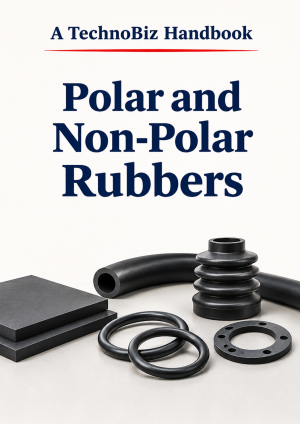
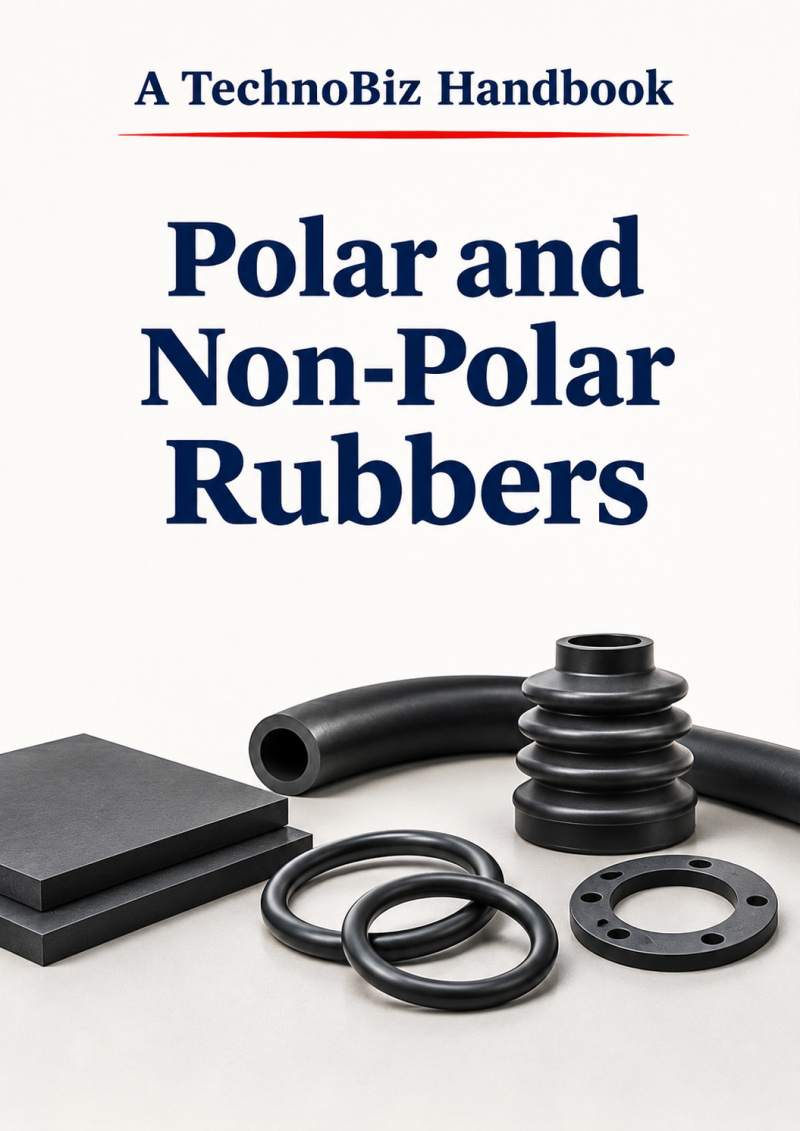
Polar and Non-Polar Rubbers
Molecular Interactions in Rubber Technology
A TechnoBiz Handbook
Publisher: TechnoBiz
Publication: A TechnoBiz Handbook
Edition: First Edition, November 2026
Language: English
Format: Digital Book (PDF)
Number of Pages: 162
This practical technical handbook explains the fundamental differences between polar and non-polar rubbers and how molecular chemistry influences material selection, compound formulation, processing, adhesion, fluid resistance and finished-product performance. It bridges the gap between polymer science and practical rubber technology, helping industry professionals understand why different rubbers behave differently under various processing and service conditions.
Purpose of the Handbook
The primary purpose of this handbook is to empower rubber industry professionals with the knowledge required to select suitable elastomers, develop better compounds, improve processing, solve compatibility problems and prevent product failures. It emphasizes that polarity is an important consideration, but not the only factor determining rubber performance.
Book Contents
The handbook covers 15 chapters:
- Fundamentals of Rubber Polarity
- Molecular Structure and Intermolecular Interactions
- Non-Polar and Low-Polarity Rubbers
- Polar and Specialty Rubbers
- Modified and Functionalized Rubbers
- Polarity and Physical Properties
- Fluid Resistance, Swelling and Permeation
- Polarity and Rubber Compound Formulation
- Polarity and Rubber Blend Compatibility
- Rubber Processing and Vulcanization
- Adhesion, Surface Chemistry and Latex Systems
- Aging, Durability and Product Failure
- Measurement, Testing and Laboratory Exercises
- Industrial Applications and Material Selection
- Emerging Technologies and Sustainability
Key Features
- More than 60 technical illustrations
- 15 illustrative industrial case studies
- 10 practical laboratory exercises
- 50 assessment questions with explained answers
- Material compatibility and comparison tables
- Worked examples and technical calculations
- Practical decision-making checklists and worksheets
- Technical glossary, abbreviations and references
Who Should Read This Handbook?
- Rubber compounders and formulators
- Rubber technologists and polymer scientists
- Production and process engineers
- Research and product development professionals
- Quality control and laboratory personnel
- Material selection and application engineers
- Technical sales and purchasing professionals
- Rubber industry consultants
- Academicians, students and industry trainees
This handbook is also a valuable technical training resource for rubber manufacturing companies seeking to strengthen their team’s knowledge, troubleshooting capabilities and technical decision-making skills.
Understand the chemistry. Select the right rubber. Formulate better compounds. Prevent product failures.