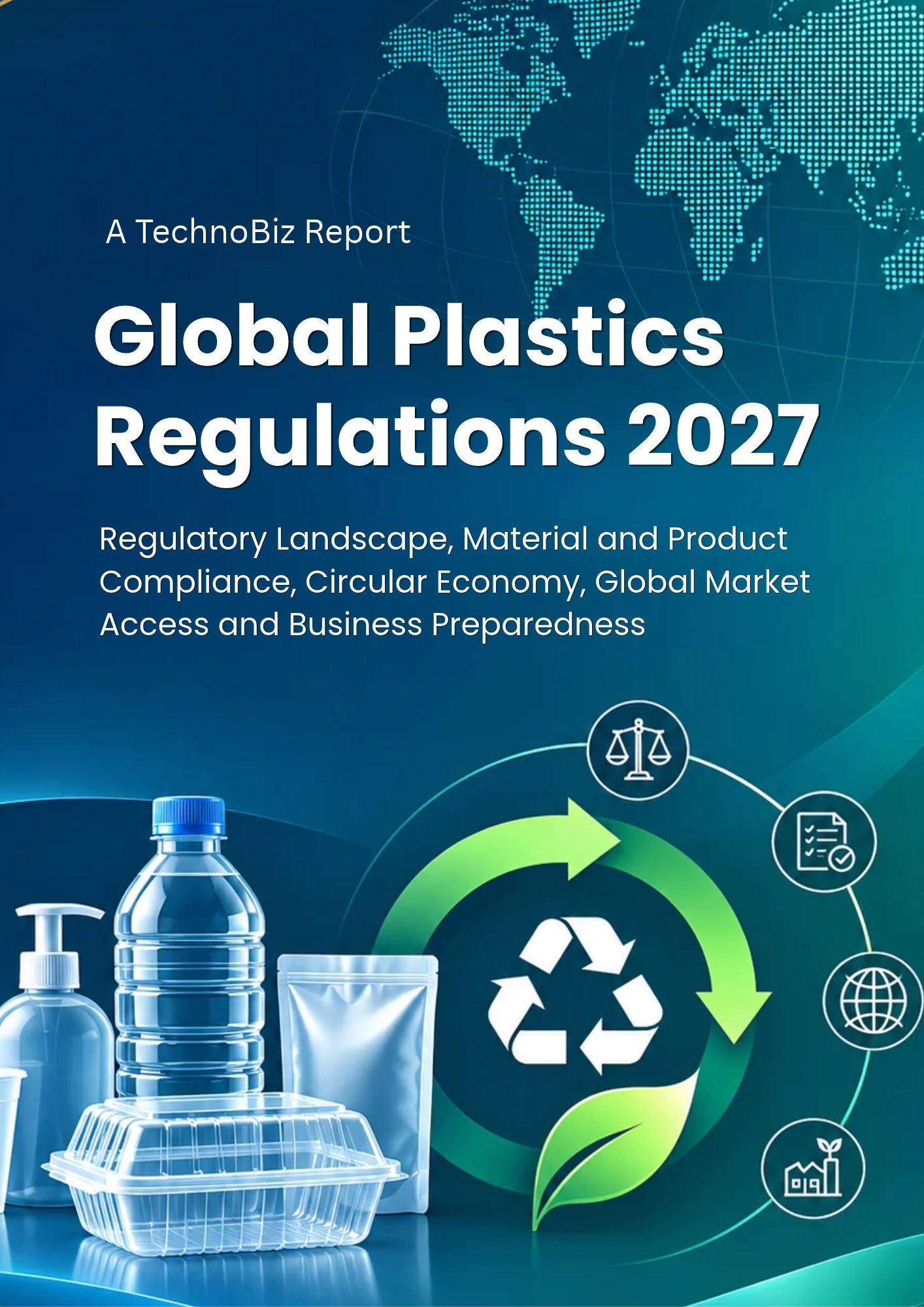
Global Plastics Regulations 2027
Regulatory Landscape, Material and Product Compliance, Circular Economy, Global Market Access and Business Preparedness
A TechnoBiz Report
Book Summary
Global Plastics Regulations 2027 is a comprehensive industry reference report providing a systematic understanding of the evolving regulatory landscape across the entire plastics value chain, from raw materials and polymer production to compounding, manufacturing, product applications, recycling and final disposal.
The report covers chemical regulations, restricted substances, product safety, manufacturing compliance, packaging regulations, food-contact plastics, recycled-content requirements, extended producer responsibility (EPR), environmental protection, international trade and emerging regulatory developments.
With particular emphasis on the European Union, Thailand, ASEAN, China, India, the United Kingdom and North America, the report combines regulatory information with scientific explanations, technical illustrations, practical case studies, worked calculations, comparative assessments and compliance management tools.
It is designed to help plastics industry stakeholders understand regulatory changes, minimize compliance risks, maintain international market access and prepare their businesses for future regulatory requirements.
Book Format & Pages
- Publisher: TechnoBiz
- Edition: 2027
- Format: E-Book (PDF)
- Language: English
- Pages: 419
- Major Parts: 20
- Chapters: 101
- Appendices: 7
- Technical Illustrations: 106
- Worked Calculations: 32
- Case Studies: 37
- Compliance Templates: 45
- Regulatory Research Cut-off: 27 November 2026
Book Purpose
This report aims to bridge the gap between regulatory knowledge and practical industry implementation. Its key objectives are to:
- Enhance understanding of global plastics regulations and emerging regulatory trends.
- Explain regulatory obligations, responsibilities, thresholds, exemptions and implementation deadlines.
- Support regulatory compliance in material selection, product development and manufacturing operations.
- Help plastics manufacturers and exporters prepare for international market requirements.
- Explain the technical and commercial implications of circular economy policies, recycling and EPR.
- Support regulatory risk assessment, compliance budgeting and investment decisions.
- Identify innovation and business opportunities arising from regulatory developments.
- Provide practical tools for regulatory intelligence, compliance documentation and business preparedness.
Book Contents
PART 01 – Fundamentals and Legal Interpretation
Chapter 1. Purpose and Evolution of Plastics Regulation
Chapter 2. Legal Architecture
Chapter 3. Applicability and Interpretation
Chapter 4. Regulatory Intelligence
Chapter 5. Executive Regulatory Intelligence and Strategic Action Plan
PART 02 – Scientific Basis
Chapter 6. Hazard, Exposure and Risk
Chapter 7. Migration and Degradation
Chapter 8. Life-Cycle Assessment
Chapter 9. Alternatives Assessment
PART 03 – International Agreements and Policy
Chapter 10. Global Plastics Treaty
Chapter 11. Waste and Chemicals Conventions
Chapter 12. Climate, Marine and Trade Frameworks
PART 04 – Polymer Materials and Chemical Safety
Chapter 13. Chemical Registration and Inventories
Chapter 14. Material Forms and Legal Identity
Chapter 15. Restricted Substances
Chapter 16. Emerging Chemical Concerns
Chapter 17. Chemical Communication
Chapter 18. Processing Chemicals and Gases
Chapter 19. Biocidal and Antimicrobial Plastics Regulations
PART 05 – Manufacturing Processes and Factory Compliance
Chapter 20. Factory Licensing and Assessment
Chapter 21. Processing Operations
Chapter 22. Good Manufacturing Practices
Chapter 23. Management of Change
Chapter 24. Regulatory Compliance in Product Development
Chapter 25. Machinery and Equipment
PART 06 – Environmental Pollution and Occupational Safety
Chapter 26. Industrial Emissions and Resources
Chapter 27. Occupational Health and Process Safety
Chapter 28. Pellets and Microplastics
Chapter 29. Contamination and Environmental Liability
PART 07 – Product Design, Packaging and Single-Use Plastics
Chapter 30. Ecodesign and Product Information
Chapter 31. Plastic Product Labelling, Marking and Consumer Information
Chapter 32. Packaging Regulation
Chapter 33. Packaging Recyclability Assessment and Design Compliance
Chapter 34. Single-Use Restrictions
Chapter 35. Reuse and Refill
Chapter 36. Bioplastics and Compostability
Chapter 37. Environmental Claims
PART 08 – Polymer-Specific and Application-Specific Regulations
Chapter 38. Polymer Families
Chapter 39. Food Contact and Drinking Water
Chapter 40. Medical and Pharmaceutical Plastics
Chapter 41. Automotive, EV and Batteries
Chapter 42. Electrical and Electronics
Chapter 43. Construction, Furniture and Transport
Chapter 44. Agriculture, Textiles and Fishing
Chapter 45. Consumer and Industrial Applications
PART 09 – Waste Management, Recycling and Circular Economy
Chapter 46. Waste Classification and Management
Chapter 47. Recycling Technology Regulation
Chapter 48. Recycled Content and Traceability
Chapter 49. Food-Grade Recycling and Legacy Chemicals
Chapter 50. End-of-Waste and Recovered Feedstocks
PART 10 – Country and Regional Regulatory Landscape
Chapter 51. European Union and Member States
Chapter 52. United Kingdom
Chapter 53. United States
Chapter 54. Canada
Chapter 55. China
Chapter 56. India
Chapter 57. Japan, South Korea and Taiwan
Chapter 58. Thailand
Chapter 59. Vietnam, Indonesia and Malaysia
Chapter 60. Philippines, Singapore and Other ASEAN
Chapter 61. Australia and New Zealand
Chapter 62. Middle East and GCC
Chapter 63. Latin America
Chapter 64. Africa and Other Emerging Markets
PART 11 – EPR, Taxation and Economics
Chapter 65. Extended Producer Responsibility
Chapter 66. Competition Law and Collective Compliance Systems
Chapter 67. Taxes, Levies and Incentives
Chapter 68. Compliance Economics
Chapter 69. Regulatory Compliance Economics: Worked Examples
PART 12 – International Trade and Market Access
Chapter 70. Imports and Exports
Chapter 71. E-Commerce and Cross-Border Plastic Product Sales
Chapter 72. Asian Exporters to the EU and North America
Chapter 73. Climate and Supply Chain Requirements
PART 13 – Testing, Certification and Documentation
Chapter 74. Standards and Conformity
Chapter 75. Testing and Measurement
Chapter 76. Compliance Evidence
Chapter 77. Customer Specifications
PART 14 – Digital Compliance and Traceability
Chapter 78. Digital Product Information
Chapter 79. Digital Reporting and Chain of Custody
Chapter 80. Data Governance
PART 15 – Enforcement, Liability and Risk
Chapter 81. Regulatory Enforcement
Chapter 82. Product and Environmental Liability
Chapter 83. Risk Management
Chapter 84. Regulatory Due Diligence for Investments and Acquisitions
Chapter 85. Post-Market Surveillance and Product Stewardship
PART 16 – Emerging Technologies and Regulatory Challenges
Chapter 86. New Materials and Recycling Technologies
Chapter 87. Competing Objectives
Chapter 88. Future Regulatory Scenarios
PART 17 – Technology Suppliers and Compliance Solutions
Chapter 89. Testing and Regulatory Services
Chapter 90. Industrial and Recycling Solutions
Chapter 91. Supplier Directory and Selection
PART 18 – Social Responsibility, Infrastructure and Transition
Chapter 92. Infrastructure Readiness
Chapter 93. Just Transition
Chapter 94. Industry Participation
PART 19 – Business Strategy, Cases and Outlook
Chapter 95. Business Impact by Stakeholder
Chapter 96. Departmental Accountability
Chapter 97. Innovation and Opportunities
Chapter 98. Case Studies and Implementation
PART 20 – Databases, Benchmarking and Practical Tools
Chapter 99. Master Regulatory Intelligence Register
Chapter 100. Comparative Databases and Benchmarking
Chapter 101. Templates and Annual Update System
APPENDICES
Appendix A. Abbreviations
Appendix B. Glossary of Key Terms
Appendix C. Primary Source Directory
Appendix D. Verification Methodology
Appendix E. Key References
Appendix F. Verification Log
Appendix G. Compliance Templates
Who Should Read This Report?
- CEOs, business owners and senior management professionals
- Polymer and plastic raw material manufacturers
- Plastics processors and product manufacturers
- Compounders and masterbatch manufacturers
- Additive and specialty chemical suppliers
- Packaging manufacturers and brand owners
- Plastics recyclers and waste management companies
- Machinery and technology suppliers
- Regulatory affairs and compliance professionals
- R&D and product development professionals
- Quality assurance and laboratory professionals
- Environmental and sustainability professionals
- Exporters, importers and international trading companies
- Investors, business consultants and financial institutions
- Government agencies and regulatory authorities
- Industry associations and professional organizations
- Academicians, researchers and students
An important industry reference for understanding regulatory changes, managing compliance challenges, protecting international market access and building a future-ready plastics business.
Disclaimer: This report is intended for professional education, regulatory awareness and business planning. Readers should verify applicable requirements against official legislation and obtain appropriate professional advice before making regulatory or commercial decisions.