Acoustic Polyurethane Foam for Noise Reduction in Tyres
A TechnoBiz Report
Report Summary
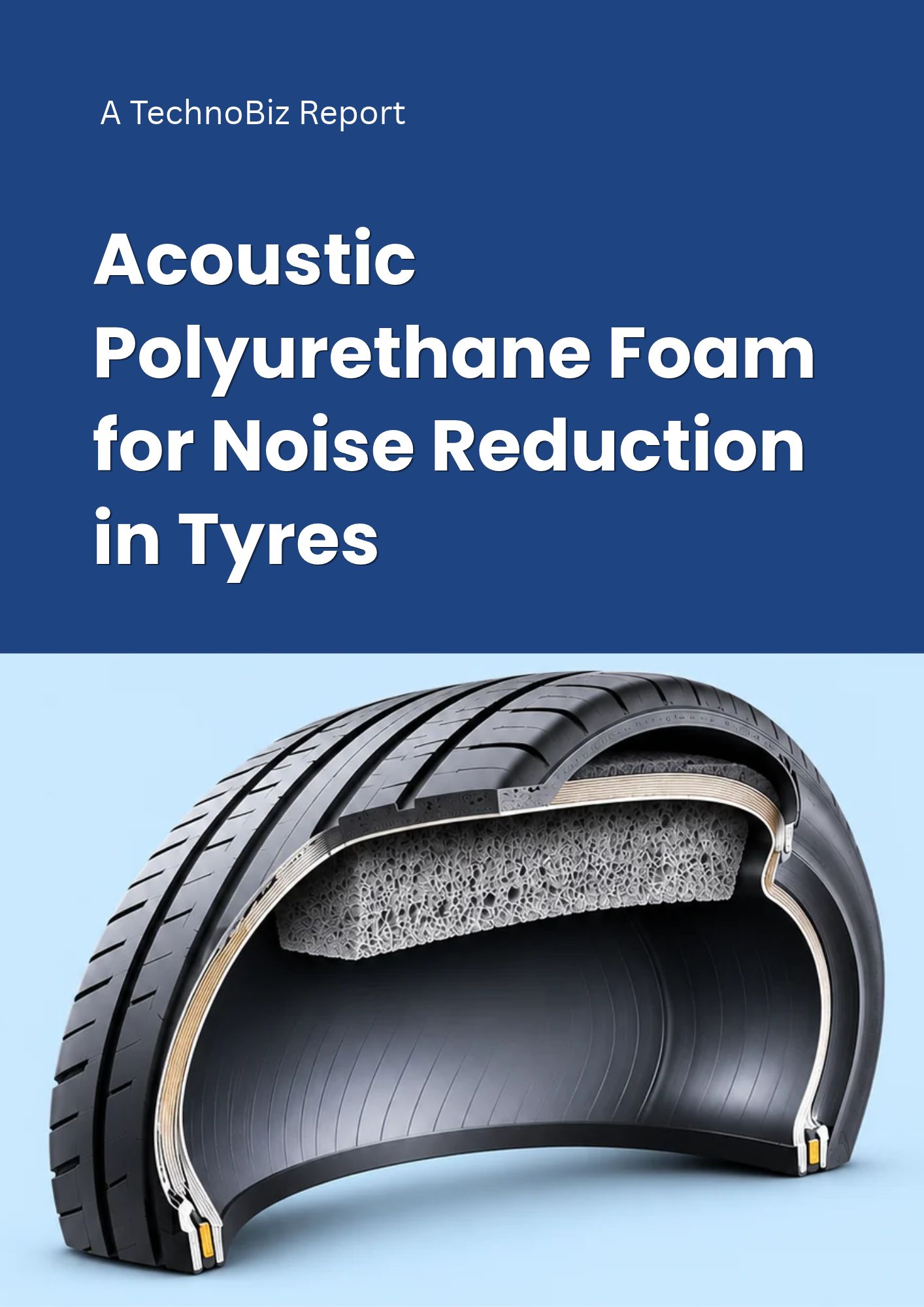
As electric vehicles and premium automobiles become quieter, tyre-generated noise has emerged as an increasingly important factor affecting driving comfort. One of the most widely adopted solutions is the use of acoustic polyurethane foam bonded inside the tyre to reduce tyre-cavity resonance and minimise the transmission of unwanted noise into the vehicle cabin.
Acoustic Polyurethane Foam for Noise Reduction in Tyres is a comprehensive technical and industry report examining the science, materials, manufacturing technologies, commercial applications and future developments of acoustic foam solutions used in modern tyres.
The report reviews publicly documented technologies from 12 leading global tyre manufacturer groups, including Continental, Michelin, Pirelli, Goodyear, Bridgestone, Hankook, Sumitomo Rubber Industries (Dunlop and Falken), Kumho, Yokohama, Nexen, Maxxis and Giti.
Beyond explaining how acoustic foam works, the report examines polyurethane formulation, foam selection, adhesive bonding, manufacturing processes, acoustic performance, durability, tyre repair, recycling and commercial opportunities.
Supported by technical illustrations, manufacturer comparisons, practical engineering discussions and references, this publication provides valuable insights for professionals across the tyre, rubber, polyurethane and automotive industries.
Report Format & Pages
- Format: Digital Report (PDF)
- Total Pages: 151
- Edition: First Edition, 2026
- Publisher: TechnoBiz
- Language: English
- Coverage: 30 chapters organised into five parts, supported by technical illustrations, tables, references, a glossary and practical appendices.
Purpose of Report
The primary purpose of this report is to provide industry professionals with a practical and technically informed understanding of acoustic polyurethane foam technology for noise reduction in tyres.
Specifically, the report aims to:
- Explain the fundamentals of tyre-cavity resonance and sound absorption using polyurethane foam.
- Examine the materials, foam structures and engineering requirements involved in developing effective acoustic absorbers.
- Review commercially available acoustic foam technologies developed by leading global tyre manufacturers.
- Explain adhesive bonding, foam integration, manufacturing processes and quality-control requirements.
- Discuss acoustic performance evaluation, testing methodologies and the limitations of manufacturer-reported claims.
- Identify challenges relating to foam durability, high-speed operation, tyre servicing, puncture repair and end-of-life management.
- Explore emerging technologies, industrial innovations and business opportunities for suppliers and manufacturers.
The report seeks to bridge the knowledge gap between tyre engineering, polyurethane materials technology and practical industrial implementation.
Report Contents
The report contains five major parts covering the complete technology and industry landscape.
Part I — Foundations of Tyre Acoustics
Explains tyre noise mechanisms, tyre-cavity resonance, sound transmission, porous absorption, acoustic performance measurements and interpretation of decibel-based noise-reduction claims.
Part II — Materials, Bonding and Manufacturing
Examines polyurethane acoustic foam chemistry, open-cell structures, material selection, airflow resistivity, foam geometry, adhesive bonding, innerliner compatibility, manufacturing processes, quality control and mechanical and thermal performance.
Part III — Global Manufacturer Technology Profiles
Provides detailed technology reviews of 12 global tyre manufacturer groups and their respective acoustic foam systems:
- Continental — ContiSilent
- Michelin — Michelin Acoustic Technology
- Pirelli — PNCS
- Goodyear — SoundComfort
- Bridgestone — B-Silent
- Hankook — Sound Absorber / i Sound Absorber
- Sumitomo Rubber Industries (Dunlop and Falken) — SILENT CORE
- Kumho Tire — K-Silent
- Yokohama Rubber — SILENTFOAM
- Nexen Tire — Noise Reduction System (NRS)
- Maxxis — Maxxis Silent Technology
- Giti Tire — EV Sound-Absorbing Layer
The manufacturer profiles discuss publicly available information on technology development, acoustic materials, commercial applications, performance claims and technical limitations.
Part IV — Testing, Durability and Product Life Cycle
Covers acoustic testing and validation, foam adhesion durability, failure analysis, high-speed performance, tyre repair and servicing, recycling, environmental considerations and life-cycle assessment.
Part V — Innovation, Business and Future Outlook
Explores emerging foam manufacturing technologies, including direct in-tyre foaming, production economics, commercialisation, supplier opportunities, future research needs and industry development trends.
Additional Resources: Glossary of technical terms, manufacturer information questionnaire, manufacturer image-source references, technical source register, supplier qualification tools and benchmarking guidance.
Who Should Read This Report?
This report is particularly relevant to:
- Tyre manufacturers and tyre design engineers involved in acoustic performance, tyre construction, product development and noise-reduction technologies.
- Polyurethane foam manufacturers and formulators exploring acoustic foam materials, automotive applications and specialised foam development.
- Rubber technologists and materials engineers seeking to understand the integration of polyurethane materials with tyre structures.
- Adhesive and chemical suppliers developing bonding solutions for acoustic foam and tyre innerliners.
- Automotive OEMs and EV manufacturers working on vehicle noise, vibration and harshness (NVH), tyre selection and passenger comfort.
- Tyre manufacturing equipment and automation suppliers interested in foam application, bonding, inspection and production technologies.
- Testing laboratories and research institutions involved in tyre acoustics, polyurethane materials, durability and performance validation.
- Tyre recycling and sustainability professionals assessing the environmental and end-of-life implications of foam-lined tyres.
- Technical managers, business development professionals and industry consultants evaluating emerging technologies, supply-chain opportunities and market developments.
This TechnoBiz Report provides a consolidated technical and industry reference for understanding how acoustic polyurethane foam is transforming tyre noise management and creating new opportunities across the rubber, polyurethane and automotive value chains.